

From The Red Cross: Help Prevent the Spread of COVID-19, Use Healthy Practices

As there is currently no vaccine to prevent COVID-19, the best defense is to follow these steps:

  • Avoid close contact with people who are sick.
  • Stay home when you are sick.
  • Avoid touching your eyes, nose or mouth.
  • Cover your nose and mouth with a tissue when coughing or sneezing and throw the tissue away after use. If a tissue isn’t available, cough or sneeze into your elbow or sleeve, not your hands.
  • Wash your hands often with soap and water for at least 20 seconds, especially after going to the bathroom; before eating; and after blowing your nose, coughing or sneezing. If soap and water are not readily available, use an alcohol-based hand sanitizer with at least 60% alcohol. Always wash hands with soap and water if hands are visibly dirty.
  • Practice other good health habits. Get plenty of sleep, be physically active, manage your stress, drink plenty of fluids and eat nutritious food.
  • Disinfect doorknobs, switches, handles, computers, telephones, bedside tables, bathroom sinks, toilets, counters, toys and other surfaces that are commonly touched around the home or workplace.
  • Follow the CDC’s recommendations for using a facemask:
    • CDC does not recommend that people who are healthy wear a facemask to protect themselves from respiratory diseases, including COVID-19.
    • Facemasks should be used by people who are ill to help prevent the spread of the disease to others.
    • The use of facemasks is also crucial for health workers and people who are taking care of someone in close settings (at home or in a health care facility).

 

Winterizing Tips for Your Home

  • Always know the location of your shut-off valve and water pipes in case of emergency.
  • Identify pipes located outside your house; they will be most vulnerable to freezing.
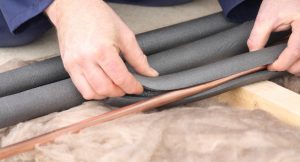
  • Insulate all water pipes in unheated areas to prevent freezing and subsequent thawing and bursting.
  • Check for any cracks or openings in walls, floors and ceilings. Caulking will help to keep cold air from entering those gaps and affecting your pipes, and your heating bills.
  • Disconnect and drain all outside hoses to prevent freezing.
  • Shut down and thoroughly drain all lawn sprinkler systems.
  • Turn off all outside spigots from inside your house, drain the lines and leave the spigots open.

Gary Brosnan Re-Elected as Water Commissioner

Congratulations to Gary Brosnan on his re-election as Water Commissioner of South Farmingdale Water District. Serving as Commissioner since 2000, Commissioner Brosnan will serve another three-year term on the Board. The results of the December 10, 2019 election provides Commissioner Brosnan with opportunity to continue serving the community he has lived in for more than 40 years.

Pilot Program for Treating 1,4-Dioxane Completed

Successful Outcome Leads to Full Plan Design

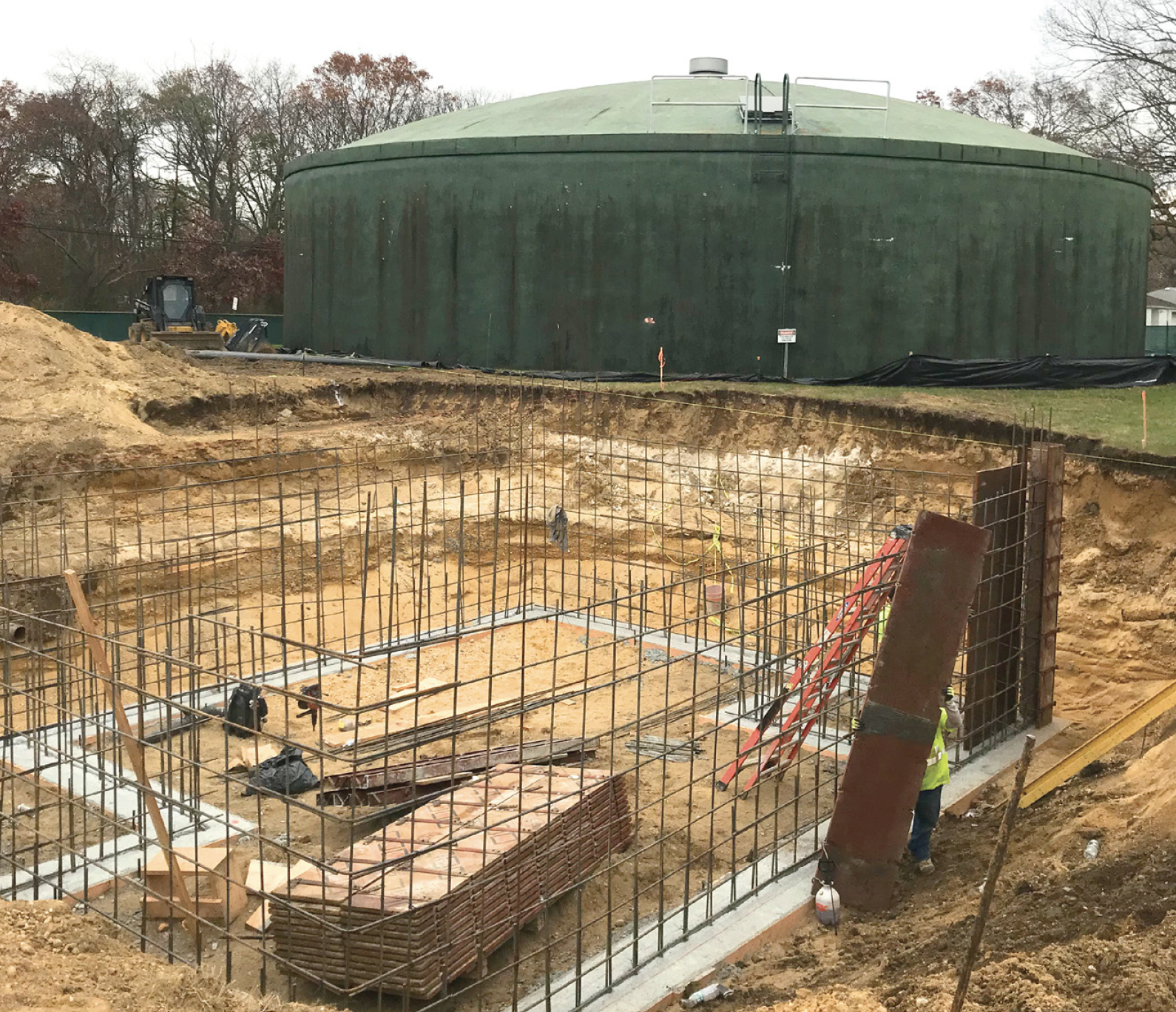
In 2020, the New York State Department of Health will set a maximum contaminant level (MCL) for the emerging contaminant 1,4-dioxane at 1.0 parts per billion (ppb). Within SFWD, there is only one well that exceeds this threshold. To comply with the upcoming state standard, the District has committed to installing an Advanced Oxidation Process (AOP) at Plant No. 3, Well 3-1, to maintain the high quality standards SFWD is committed to providing. SFWD does not plan on using Well 3-1 at this time, and there is plenty of redundancy within the District to continue an uninterrupted supply of water. Any and all action taken by the District will not affect water quality and water flow for our consumers. To establish proof of concept, SFWD developed an advanced oxidation process pilot program this summer to effectively remove 1,4-dioxane from our source water. The District brought in scientists with leading technology and instrumentation for a full week of testing. Once the testing was completed, samples were brought back to a lab for review of all variables and chemical rates. The Board of Water Commissioners is extremely pleased to report that the pilot program was successful, and the District has gained proof of a successful concept to start the design phase for full-scale treatment. Construction will begin in Summer 2020 and the District anticipates Well 3-1 will be back online within one year. A $3 million grant covers part of the estimated $5 million cost of the construction of the AOP. The remaining budget is covered within our Capital Improvement Campaign.

Iron Removal Filtration System Underway at Plant No. 4

Most people may not know that iron occurs naturally in groundwater. And while you can slightly taste the difference in the water and see a slight color contrast, it is certainly not harmful. After conducting many scientific and engineering studies and recognizing an increase in iron concentration, it was determined that the current system in place at Well 4-1 made it no longer practical to remove iron from the water. In order to maintain a high level of water quality, the District decided to construct two horizontal pressure filters to treat iron levels. Now, all six well sites within SFWD have an iron removal filtration system. Well 4-1 is the only well at Plant No. 4, and the $3 million project was funded through the Capital Improvement Campaign, which started in late October. The project is scheduled to be completed in Spring 2020.

2018 Water Quality Report

In accordance with Federal and State regulations, South Farmingdale Water District produces an Annual Drinking Water Quality Report. This in-depth report is filled with important information regarding water quality, cost, sources, treatment and more. The most recent Drinking Water Quality Report can be found on our Water Quality page and can be viewed online as a PDF.

The South Farmingdale Water Commissioner Election 2018

vote

Date and Time:
Tuesday • December 11, 2018 • 4:00 p.m. – 9:00 p.m.

Where:
North Massapequa Fire Department
1000 North Broadway
Massapequa, NY 11758

South Farmingdale Fire Department
819 South Main Street
South Farmingdale, NY 11735

The South Farmingdale Water District encourages all registered voters living in the District to come out and vote!

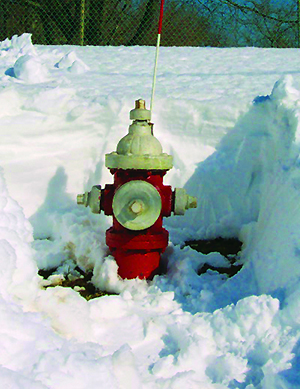
Winter is Coming! Please Keep Fire Hydrants Clear of Snow

It’s that time of the year, and it’s likely that we will see our share of snowfall this winter season. During snowstorms, snowplows may blanket many of our neighborhood fire hydrants, making it nearly impossible for the local fire departments to locate them quickly during an emergency situation. In the event of a fire, precious time is lost when firefighters have to locate and shovel out fire hydrants before hooking up to them., 
The South Farmingdale Water District (SFWD) is asking local residents to be aware of any fire hydrants that may become buried during a snowstorm or after a snowplow comes through the neighborhood. 

SFWD is responsible for the maintenance of all 1,250 fire hydrants within our District, a public safety measure often taken for granted. Hydrants require regular painting to remain visible to firefighters. The District also routinely tests all hydrants for performance, inspects them for leaks and flushes them to maintain maximum pressure.

As members of the communities they serve, SFWD Water Commissioners are very aware of safety and operational issues that affect us all. They stated, “We have a deep sense of personal responsibility to our fellow neighbors and we thank all our consumers in advance for their cooperation in keeping fire hydrants visible this winter.”

Helpful Tips and Suggestions to Winterize Your Home

Cold weather and heavy snow can certainly effect your home or business. Extreme weather conditions may lead to pipes freezing and eventually bursting.  Here are a few winterizing tips that you can apply during the winter season to help avoid devastating damages:

  1. Identify the pipes that will be most affected or most vulnerable to freezing…inside and outside of your home or business. Pipes in unheated areas in your home or business can become problems in cold weather. Insulate all water pipes in unheated areas to prevent freezing and subsequent thawing and bursting.  Foam insulation works well. This insulation can also reduce the amount of water that must be run before hot water is discharged from faucet or showers.
  2. If you see a leak, don’t hesitate to fix it.  If you cannot fix the leak yourself, call a professional plumber to remedy the problem before it becomes a major expense.
  3. To further safeguard pipes, especially in uninsulated areas, open any cabinet doors under sinks, particularly those located on outside walls. This allows the warmer room air to help prevent freezing.
  4. Disconnect and drain all outside hoses to prevent freezing.  Outdoor hoses should be stored where they will not freeze to prevent cracking.  Replacing hoses can be expensive!
  5. Turn off the water that leads to the spigots outside your house.  Drain the lines and leave the spigots open during the winter.
  6. Foam insulation covers are available for outside spigots.  They are inexpensive and can be extremely helpful.
  7. Shut down and thoroughly drain all lawn irrigation systems. Check meter pit covers to assure that they are securely bolted down and intact.  If you don’t feel comfortable doing it yourself, call in a professional.
  8. Attention snowbirds! If you are snow birding to warmer climates, or going away for a lengthy time during the winter, consider shutting off your water pump and water heater.